How Climate Storytelling Found Me
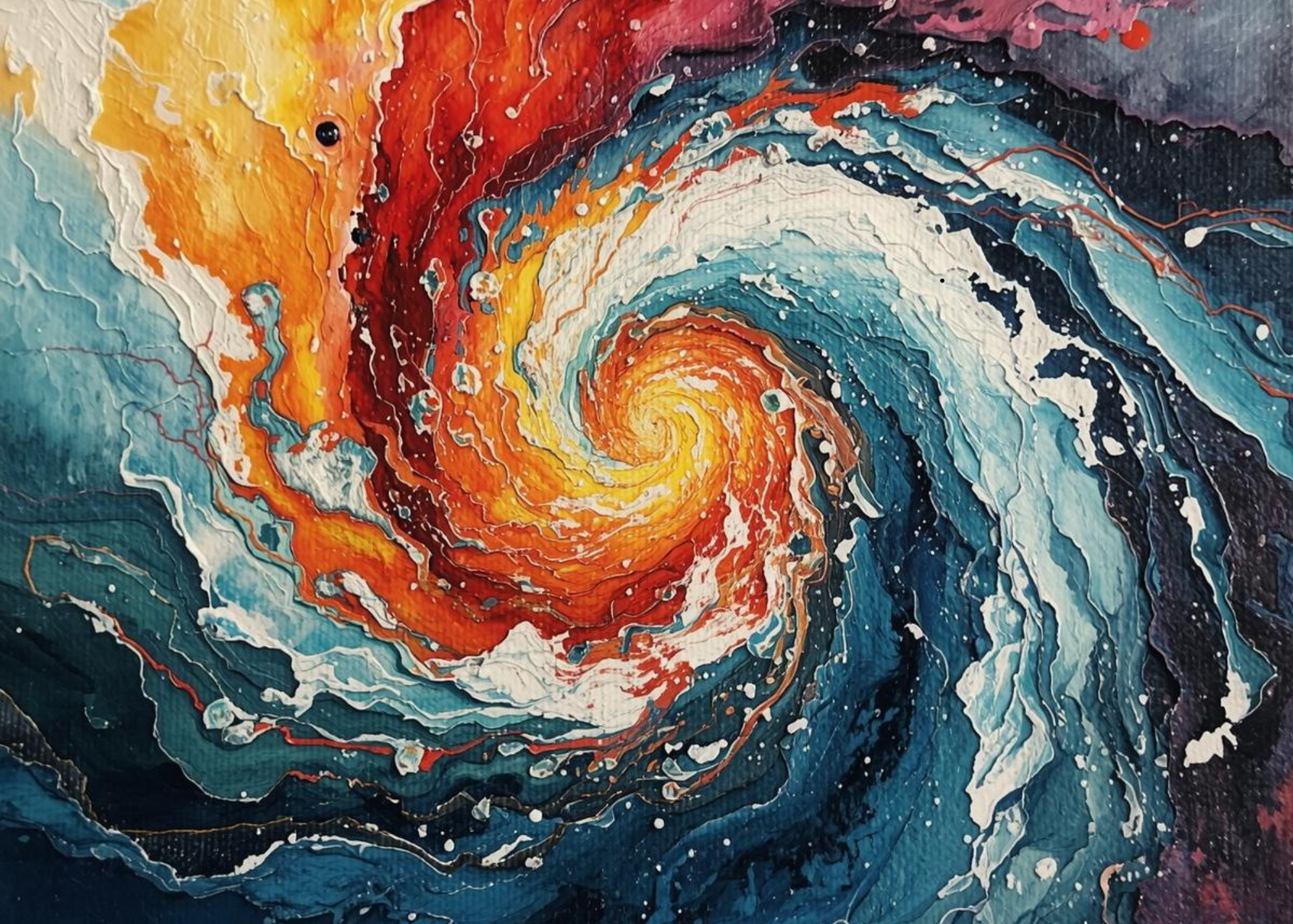
AI generated hurricane art
The old historic building where I live in North Asheville is the kind of place that attracts interesting people, and it didn’t take long for me to take note of a fellow Gen Xer and film industry veteran who lives in one of the building’s unique, quirky apartments. A man of many titles, still active in Hollywood, he also happens to be a climate philanthropist.
A few months back, after reading my pilot for The French Broad Revival, the man of many titles thoughtfully and unassumingly sent me a text message — a link to the NRDC Climate Storytelling Fellowship.
I stared at my phone, genuinely taken aback. Climate Storytelling?
I’d spent all of 2025 developing, writing and circulating two television pilots — both of which I believe represent the strongest work of my creative life thus far. Determined to get the material out into the world, I sought professional coverage and entered a wide range of screenwriting competitions and festivals, where the scripts received thoughtful responses and numerous official selections.
The French Broad Revival also received coverage through The Black List — where, in plain sight, the NRDC Climate Storytelling Fellowship was listed as a relevant opportunity. And yet, somehow, I had completely missed it. More surprising still, until that moment, the climate dimension of what I had written had never consciously crossed my mind.
When I set out to write this show, I honestly wasn’t thinking in terms of climate at all. The story was born from my lived experience of Hurricane Helene, yes — but my primary focus was on writing a deeply character-driven drama, one with long, evolving arcs, rooted in the Appalachian region, and built to sustain multiple seasons. The experience of developing and writing it became a self-apprenticeship in learning to let the inner lives of my characters lead the story.
I was — and still am — adamant that the hurricane itself is not what the story is about. This is not a “disaster flick,” and it was never intended to be one. When writing the pilot, I was very mindful and certain that I wanted to keep the approaching storm largely in the background of the characters’ lives — present, looming, but not yet dominant — until the moment it arrives and the characters are forced into survival mode.
Whenever I develop a new project, the first thing I try to do is listen for what theme is emerging. With The French Broad Revival, the theme that kept returning was simple and persistent: Where is true home? It’s a question that has followed me all of my life. A ‘military brat,’ born in Germany and raised in rural North Carolina, I grew up feeling distinctly like an outsider, even as a child. Nowhere has ever quite felt like home, and that missing sense of rootlessness is something I’ve been circling for decades.
If there is any place in my fifty-two years on this planet that has come closest to feeling like home, it’s Asheville. So when Hurricane Helene tore through the place I had finally allowed myself to claim, the ripple effect through my psyche was profound. And like most writers, my first instinct was to turn to the page.
For the first six months after Helene, Asheville was very much still recovering — and so was I. I needed some distance, and I knew it, so I chose to write something lighter first, set far from home. I wrote an upbeat dramedy pilot set in Scotland, threaded with Appalachian musical roots. With its theme of “it’s never too late to become what you might have been,” it became a kind of inspirational therapy — a way for me to breathe again and feel inspired.
But once I began to feel steady, I knew I wanted to tackle a real drama — a prestige series that would test the full range of my blooming craft. In September of 2025, nearly a year after the storm, I finished the pilot for The French Broad Revival.

The French Broad Revival
After a record-breaking flood devastates the Blue Ridge Mountains, a fractured circle of artists, neighbors, and elders must rebuild what was lost — and face the question: where is home, when everything has been washed away?
“It’s not down on any map; true places never are.” - George Melville
60 min Prestige Drama Series
Primary Location: Asheville, North Carolina
Akin to HBO’s Treme, set in post-Katrina New Orleans, The French Broad Revival channels the raw, creative spirit of Appalachia while drawing on the multigenerational emotional storytelling of NBC’s This is Us.
When the aforementioned neighbor — the man with many titles — forwarded me the link to the storytelling fellowship, I remember reading it slowly, then reading it again. I was shocked. It brought about an immediate reframing, a new dimension I hadn’t considered before.
The process that followed — exploring the many resources provided to applicants by the fellowship committee (see links below) — fundamentally shifted how I see The French Broad Revival, even though, on paper, nothing about the project had actually changed.
What had changed was my awareness.
Until that moment, I hadn’t named what I was writing as climate storytelling. In many ways, climate storytelling had found me first. But once I recognized it, something clicked. I could never again unsee it. And from that point on, the series as a whole began to take shape with greater purpose.
As a side note — yes, I am venturing to write all eight episodes of the first season. By most industry measures, this is a terrible idea. The prevailing wisdom is that aspiring screenwriters are expected to deliver a pilot, not a season. It’s often framed as naïve, even pretentious, for a newcomer — no agent, no manager, no sold work — to attempt a full season. I know the rules. I know the warnings. I’ve heard them all.
But here’s the truth: I’m in the second half of my life, and I no longer feel the need to ask permission. Writing this series is how I want to spend my time. It’s how I want to challenge myself creatively. It’s the work that feels most alive to me right now. So I’m doing it. I’m going for it. And now, with a deeper awareness of what this story can hold — and what climate storytelling makes possible — I’m writing with renewed purpose.
Learning about climate storytelling has sharpened my responsibility as a storyteller — and not in a preachy way. What this shift has given me is clarity. I’m approaching my writing with a deeper awareness of what it means to create characters and stories that can genuinely serve humanity: stories that acknowledge climate as an undeniable factor in our lives, and that remain rooted in honest, grounded portrayals of the realities shaping us right now.
At its heart, the French Broad Revival is not only about a city rebuilding after disaster; it’s about people discovering that healing the land and healing themselves are part of the same work — and that home isn’t just a place on a map, but something we create together when everything else has been washed away.
As for the storytelling fellowship, of course it would be more than meaningful to receive. A $20,000 grant would be genuinely supportive as I continue giving screenwriting my fullest attention, alongside running a small business with my husband. And the visibility it could bring to the project would represent a real and potentially life-changing opportunity.
But regardless of the outcome, I’m grateful for how this process has grounded my sense of purpose. In the end, what screenwriters hope for is simple: to see our work come alive on screen — and, if we’re fortunate, to have it reflect something true about the world we’re living in.
Climate Storytelling Resources:
Rewrite the Future - Partnering with Hollywood to tell the story of climate change.
Climate On Screen - THIS IS WHERE CLIMATE AND GREAT STORIES CONNECT
The Playbook for Screenwriting in the Age of Climate Change | Good Energy
Climate Content/Greening Your Content – Green Production Guide