Keep It Local: The Case for Filming The French Broad Revival at Home
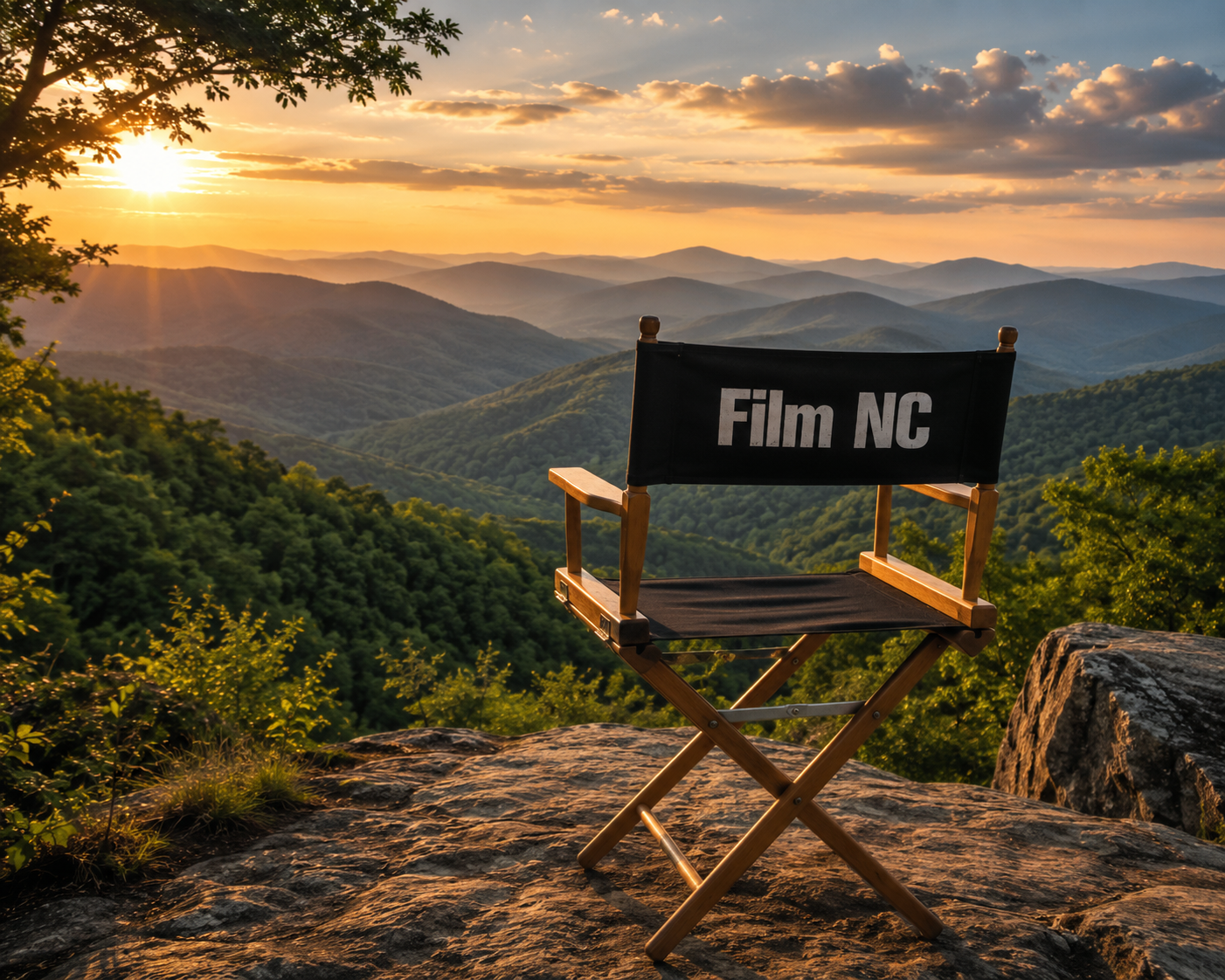
I've never once imagined The French Broad Revival being filmed anywhere but North Carolina. Last week, the state made that vision considerably more practical.
North Carolina's newly signed state budget includes a significant expansion of the state's film incentives, raising the maximum grant available to a television series from $15 million to $25 million per season. The change, reported this week by WECT, comes as states and countries around the world continue to compete aggressively for film and television production.
For The French Broad Revival, the timing matters.
This is a North Carolina story from its inception. Conceived and written in Western North Carolina, the series is rooted in the aftermath of Hurricane Helene and in the communities along the French Broad River still living through the long work of recovery. Asheville, the River Arts District, Southside, the river itself and the surrounding mountain hollers are not interchangeable backdrops. They are part of the story's cultural and visual identity.
Film incentives have made production an increasingly global calculation. Countries including Australia offer substantial rebates to attract large-budget film and television projects. But for a series like The French Broad Revival, the question is not simply which location offers the largest percentage on paper. North Carolina already offers a rebate of up to 25 percent on qualified production expenses, and the new $25 million television-series cap significantly expands what is possible for a production of this scale. The North Carolina Film Office outlines the state's current incentive structure.
Just as importantly for a series that requires extensive flood and water sequences, the production infrastructure is already here. Cinespace Wilmington operates ten active soundstages on the North Carolina coast, including stages with built-in special-effects water tanks suited to controlled water work. Western North Carolina can provide the irreplaceable locations; Wilmington can provide the studio infrastructure. There is increasingly little financial or creative justification for taking a North Carolina story somewhere else and asking another place to pretend.
The French Broad Revival was born here. Its story belongs here. And as North Carolina strengthens its commitment to film and television production, the case for keeping the series in the state — from development through filming — has never been stronger.
Keep it local.