The French Broad Revival
The McCrae Family
The McCrae Holler
The McCrae family land sits on more than one hundred acres along the side of a mountain outside Asheville, North Carolina. The property stretches from the lower road frontage along the creek up into the forested ridge above, encompassing a patchwork of hollers, pastures, and wooded slopes that have been in the family for generations. Scattered across the land are multiple dwellings - some close enough to walk between, others tucked deeper into the woods and reachable only by narrow dirt tracks. Small houses, trailers, sheds, and old work buildings sit wherever a McCrae once carved out a place to live.
The land itself has been held by the McCrae family since the earliest wave of Scots-Irish settlers pushed into the Appalachian backcountry in the late eighteenth century. Like many families of that migration, the first McCraes came down through Pennsylvania and the Shenandoah Valley before eventually settling in the mountains of western North Carolina, where steep land and isolation offered both opportunity and refuge. Over time, the family expanded outward across the mountain rather than leaving it. Sons built houses along the ridge. Cousins settled near the creek. Small parcels were carved off informally within the family but rarely sold outside it. The result is less a single homestead than a loose mountain compound—an extended family territory that has evolved slowly over two centuries.
Locals often refer to the place simply as “the McCrae holler.” It is a landscape shaped as much by memory as by geography: old logging roads turned into driveways, rusted trucks resting where they died, gardens that appear and disappear with each generation. Some houses are sturdy and lived-in; others lean toward collapse, slowly returning to the woods. What binds it all together is the understanding - spoken or not - that this mountain belongs to the McCraes, and always has.
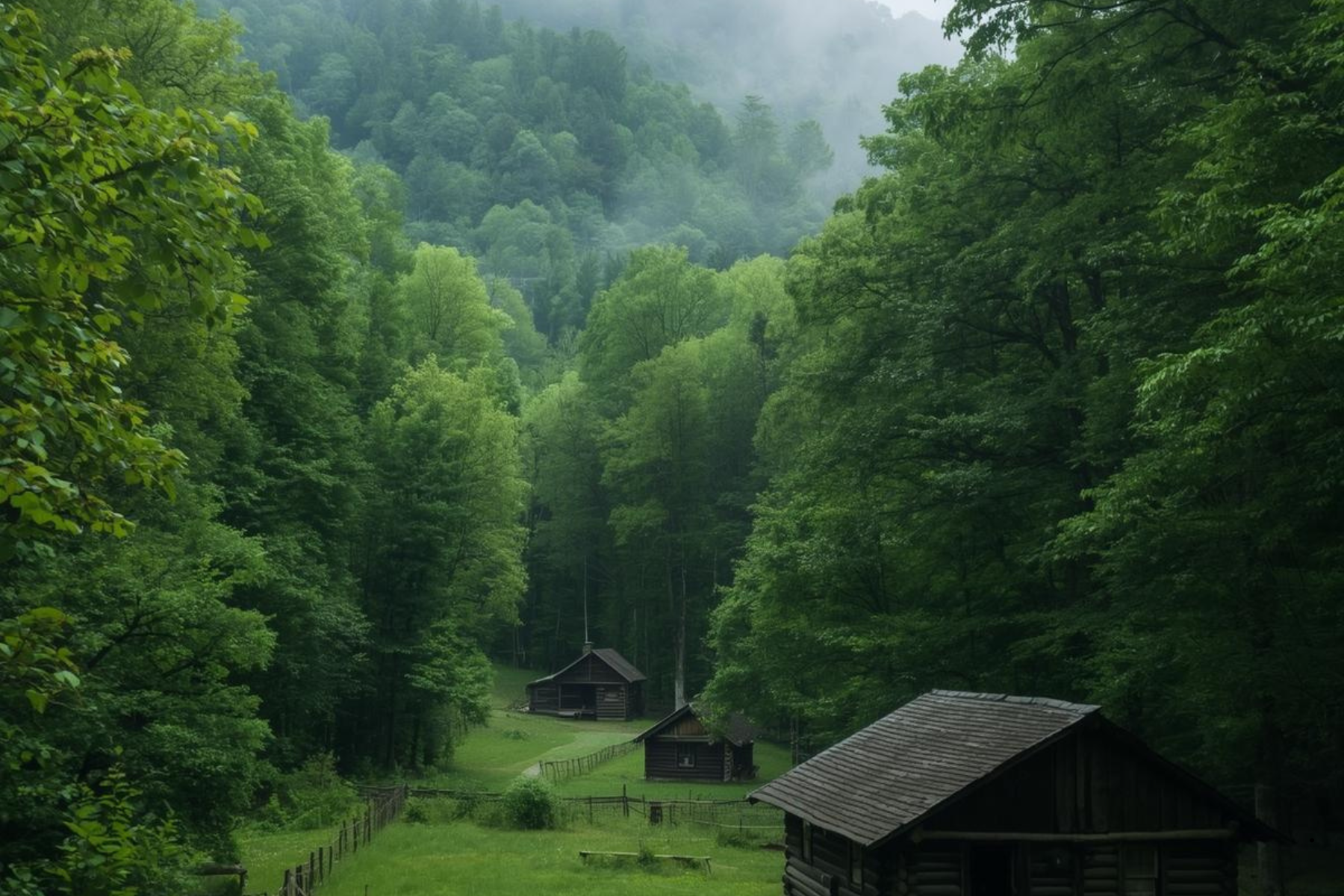
What is a “Holler?”
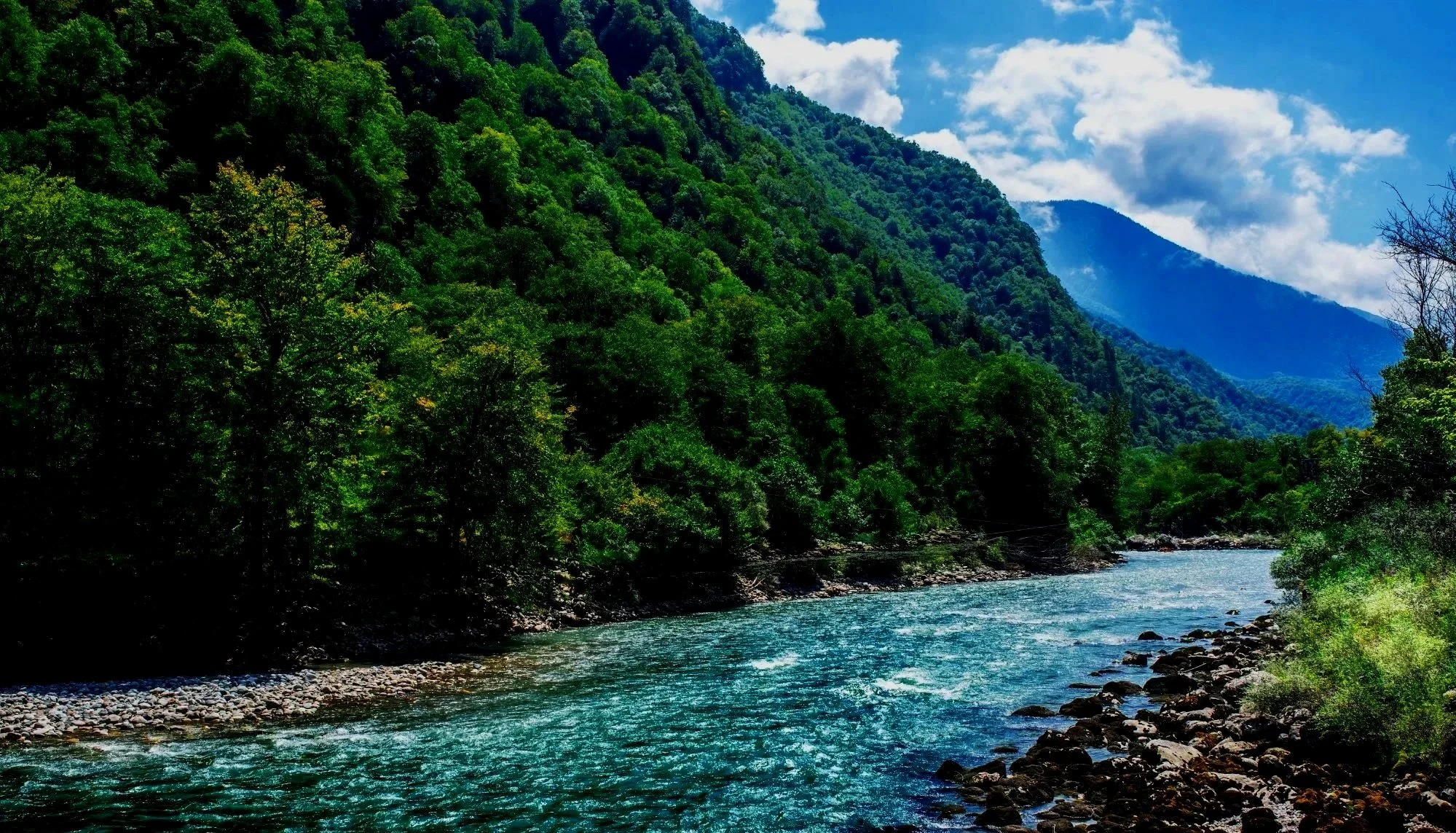
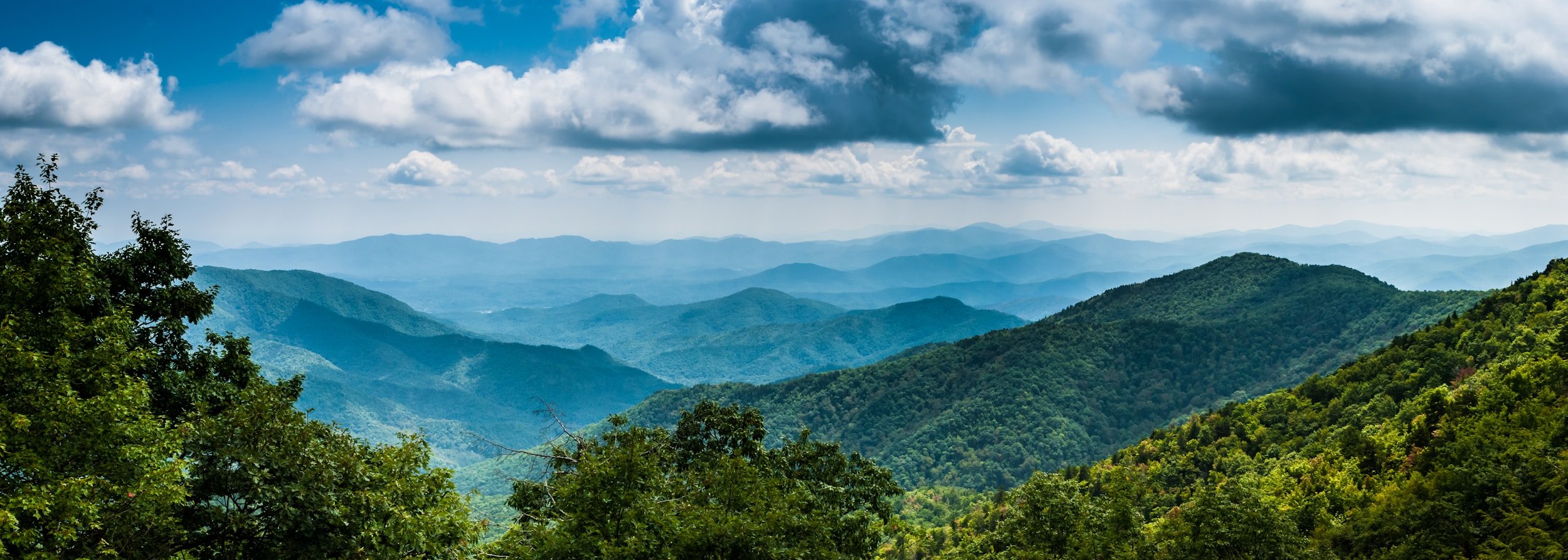
In Appalachia, the word “holler” (a regional pronunciation of hollow) refers to a narrow valley between steep mountain ridges, usually carved by a creek or small river. Homes are typically strung out along a single road or dirt track following the water up into the mountains. Because the terrain is steep and wooded, properties often feel hidden or isolated even when multiple families live within the same valley.
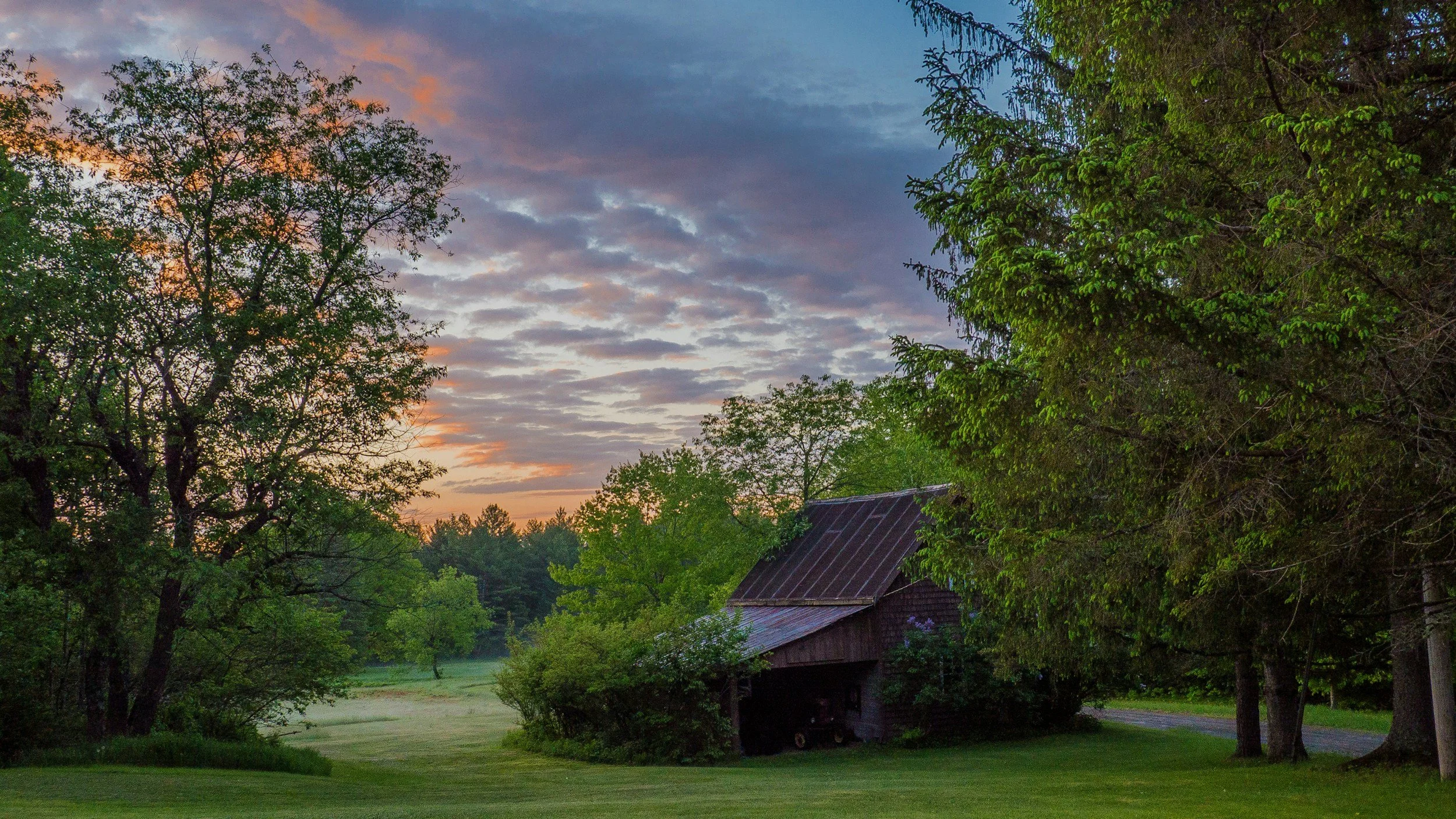
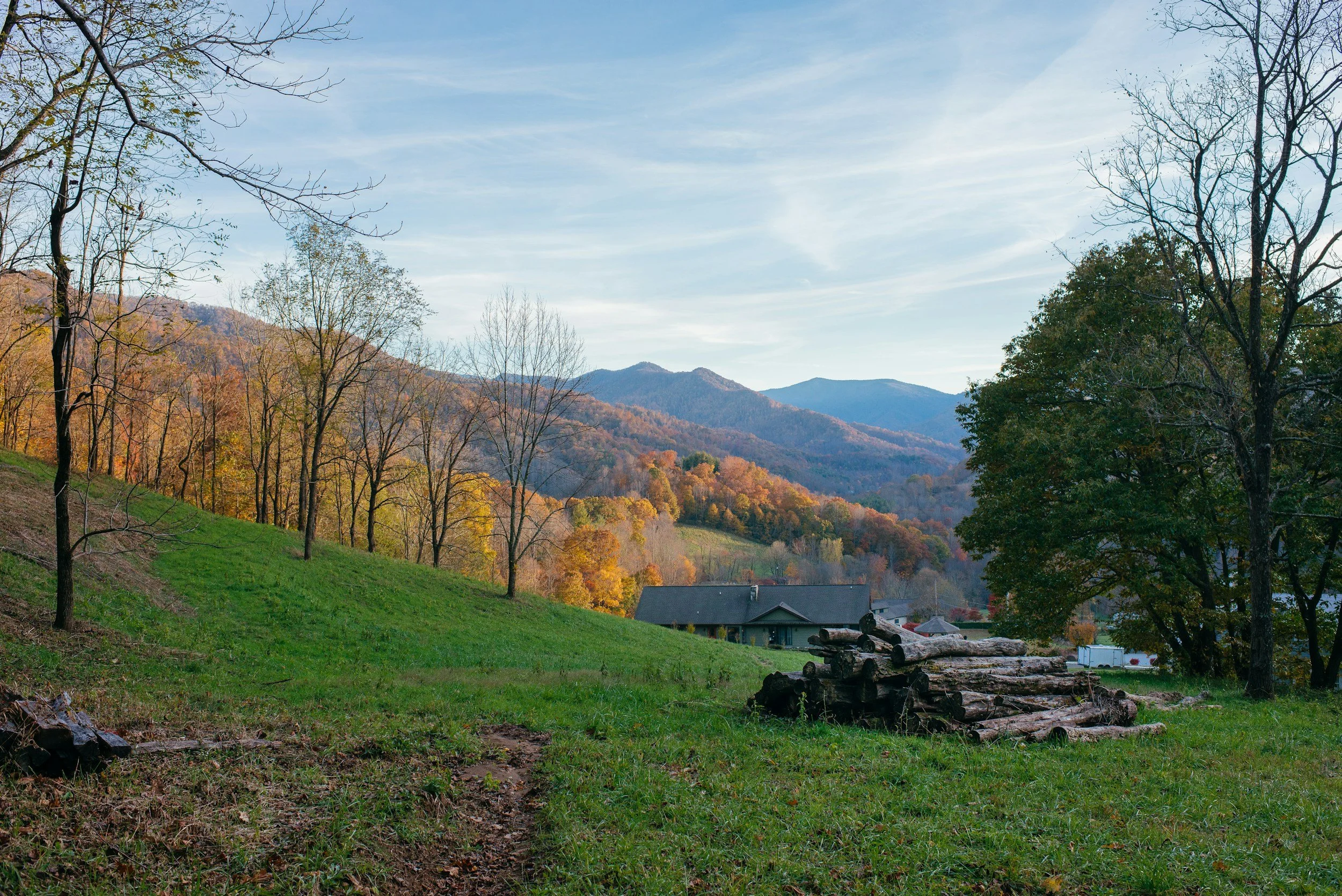
In western North Carolina - particularly in Madison, Yancey, Haywood, and Buncombe counties - many hollers developed as extended family settlements. A single family might occupy an entire hollow for generations, with houses gradually appearing wherever a relative cleared a small patch of land along the creek or on a shelf of hillside. Over time this produces the kind of landscape associated with places like the McCrae property: scattered homes, trailers, barns, and sheds connected by winding gravel roads, all within a single mountain drainage.
Visually, a holler tends to have a few consistent geographic features:
• A creek or branch running along the valley floor
• One narrow road following that creek
• Steep forested slopes rising immediately on both sides
• Houses and outbuildings tucked irregularly along the road or hillside
This geography is part of why families like the McCraes could remain on the same land for generations. Hollers create natural pockets of isolation where extended kin networks historically lived close together but somewhat removed from nearby towns.
The McCrae Lineage
The surname McCrae (also spelled MacRae) is a Scottish Gaelic name originating in the western Highlands of Scotland. It derives from the Gaelic “Mac Rath” or “Mac Raith,” generally translated as “son of grace,” “son of prosperity,” or sometimes “son of fortune.” Over time the pronunciation evolved into MacRae, McRae, and McCrae, with the latter spelling becoming common among Scottish families who emigrated to North America.
Historically, the Clan MacRae was closely associated with the rugged region of Kintail in the northwest Highlands. The MacRaes were not a large ruling clan but were known as fierce and loyal allies of the powerful Clan Mackenzie. Because of their reputation as dependable fighters and guardians of clan territory, they were sometimes referred to as “the Mackenzies’ shirt of mail,” meaning the protective armor surrounding the larger clan. Many MacRaes served as warriors, cattle drovers, and keepers of remote Highland lands.
During the 18th century, waves of Highland Scots and Scots-Irish immigrants left Britain for North America due to economic hardship, political upheaval after the Jacobite rebellions, and the later Highland Clearances. Many families with names like MacRae, McRae, and McCrae migrated first to Pennsylvania and the Shenandoah Valley, then gradually moved south and west into the Appalachian Mountains. Western North Carolina, with its steep ridges and isolated valleys, felt geographically and culturally familiar to Highland settlers. As a result, Scottish surnames - including McCrae - became common throughout the mountain counties of North Carolina.
Within an Appalachian context, a family named McCrae would plausibly be understood as descendants of these Scots or Scots-Irish settlers who established homesteads in the mountains in the late 1700s or early 1800s. Over generations, such families often remained rooted to the same land, with cousins and descendants spreading across nearby ridges and hollers while retaining a strong sense of shared lineage and territory. This long continuity of land and kinship is a hallmark of many old Appalachian mountain families.
By the late eighteenth century, Scots-Irish families were among the primary European settlers of the southern Appalachian backcountry.
Several cultural traits associated with Appalachia trace strongly to these settlers:
• Front-porch string music traditions that evolved into old-time and later bluegrass
• Clan-like family structures with deep attachment to land and lineage
• Log-building craftsmanship and practical mountain architecture
• Self-reliance and suspicion of distant authority, born from frontier isolation
• Preservation of ballads and storytelling traditions derived from the Scottish Highlands
For a family like the McCraes, the implication is that their ancestors likely arrived sometime in the late 1700s or early 1800s, claimed a mountain hollow, and then remained rooted there for generations - expanding the family footprint across the same ridge rather than moving away. This pattern of long land continuity is historically accurate for many old Appalachian mountain families.
The First Appalachians
Scots-Irish: the road to Appalachia
The McCrae Family Structure
The McCrae family represents a long-established Appalachian mountain lineage whose members have remained tied to the same land for generations. The current family structure centers on four siblings and the next generation of sons and nephews who grew up within the same mountain holler.
The Siblings
• Loretta McCrae – Eldest sibling (late 60s)
Holds the strongest operational authority within the family. Exercises practical control over land use and logistical matters tied to the property.
• Calvin “Gunny” McCrae – Second sibling (early 60s)
Father of Colt McCrae.
• Roy McCrae – Third sibling (late 50s)
Serving a long prison sentence. Father of Luke and Skeeter McCrae.
• Wade McCrae – Youngest sibling (early 50s)
Colt’s uncle. Deceased during Hurricane Helene.
Next Generation
• Colt McCrae – Son of Gunny McCrae.
• Luke McCrae – Son of Roy McCrae (early 30s)
Old enough to remember his father prior to incarceration.
• Skeeter McCrae – Younger son of Roy McCrae (late 20s)
Very limited memory of his father.
Parental Circumstances
Following Roy McCrae’s incarceration, Luke and Skeeter’s mother left the area with another man and did not return. No formal custody arrangement occurred within the family. The boys grew up primarily within the broader environment of the McCrae property and surrounding holler rather than under the consistent authority of any single guardian.
Family Dynamics
The McCrae family system is shaped less by conventional household structures and more by proximity to land and kin. Multiple generations have lived across the same mountain territory, occupying separate dwellings scattered across the property while remaining part of a shared family orbit.
Gunny McCrae
Calvin “Gunny” McCrae was born in the early 1960s (approximately 1962 - 1964) and enlisted in the U.S. military at a young age, a common path for men from rural Appalachia. He served during the Gulf War (1990 - 1991) and returned home around 1991 - 1992, when his son Colt was still very young. The man who came back from war was markedly changed - carrying PTSD, hypervigilance, insomnia, and the emotional dislocation common among combat veterans adjusting to civilian life. Shortly after his return, Gunny faced another devastating battle at home: his wife Ruth McCrae was already suffering from an aggressive cancer that would soon take her life. Ruth had been the emotional and spiritual center of the family - a gifted gospel singer whose warmth and faith grounded both Gunny and their young son. Her slow decline placed enormous emotional and financial strain on the household and deepened Gunny’s sense of helplessness, echoing the trauma he had carried home from the war.
Before these losses, Gunny had been a quiet but dependable mountain man - reserved, proud of his Appalachian roots, and deeply devoted to his wife even if he struggled to express affection openly. The war unsettled him, but Ruth’s presence kept him tethered to ordinary life. Her death, however, became the defining rupture in Gunny’s story. Unable to protect the person he loved most, he withdrew further into isolation, anger, and shame. In the years that followed he hardened emotionally, retreating deeper into the land and into a survivalist mindset shaped by fear and distrust. His growing cache of weapons and bunker-building behavior reflects less an obsession with arms than a psychological attempt to create safety in a world that has repeatedly proven unsafe.
This history profoundly shapes Colt McCrae’s upbringing. Colt grows up with a father who cannot articulate love and with the lingering memory of a mother whose music once filled the house with warmth. The result is a childhood defined by silence, unresolved grief, and the pressure to embody traditional Appalachian toughness while secretly longing for emotional connection. For Colt, music becomes the only place where vulnerability feels safe. Within the larger narrative of The French Broad Revival, Gunny’s trajectory represents a generational inheritance of trauma - war, loss, masculinity defined by endurance rather than healing - while Colt’s journey represents the possibility of breaking that cycle. Gunny’s bunker and weapons ultimately function as symbolic armor, while the series itself explores whether true safety and belonging can instead be rebuilt through family, community, and reconciliation.
The Ledford Family
The Ledfords are extended blood kin to the McCrae family through Ruth Ledford McCrae, Gunny’s late wife. Ruth was born into the Ledford family before marrying Calvin “Gunny” McCrae, creating a blood connection between the Ledfords and the McCrae household through Colt’s maternal side. Within family shorthand they are often referred to simply as “the Ledfords,” “Ruth’s people,” or “kin up the ridge.” Older mountain phrasing sometimes refers to them as “Ray Ledford’s bunch,” referencing an earlier Ledford elder connected to the family line.
While the kinship is recognized, the Ledfords live largely outside the day-to-day orbit of the McCrae household. The relationship is close enough to carry weight within the family network but distant enough that the Ledfords are generally left alone to live as they choose.
The Ledford family is included in the series as an illustration of a reality that still exists in parts of rural Appalachia. While the specific characters are fictional, households living largely off-grid - beyond formal infrastructure, government systems, and institutional oversight - are a documented and enduring feature of the region’s mountain culture.
Location
The Ledford household sits high on the mountain above the primary McCrae property. Their home lies at a higher elevation than both the McCrae family house and Loretta’s section of the land. Access is informal and difficult. There is no maintained road. The property can be reached only by a narrow footpath, an old logging cut, or a rough ATV trail that becomes unreliable in bad weather.
Because of this isolation, the Ledford residence does not appear in most official records. The home has no registered utilities and is not included in standard emergency response mapping. During disasters or county wellness checks, the family typically falls outside the systems that track rural households. The Ledfords are not deliberately hidden - they simply live beyond the reach of most institutional infrastructure.
Household
• Earl Ledford - Father
• Darla Ledford - Mother
• Mavis Ledford - Eldest daughter (early teens)
• Jonah Ledford - Son (around 10-11)
• Eliza Ledford - Daughter (around 7-8)
• Boone Ledford - Son (around 5)
• Fern Ledford - Youngest daughter (toddler)
Living Conditions
The Ledford home is a hand-built structure that has been expanded gradually over time. What began as a small mountain shack has been added onto piece by piece as the family grew. The structure is rough and weathered but serviceable.
The household operates without electricity or municipal utilities. Water is taken from the creek or collected through basic catchment methods. Heat and cooking come from a wood stove. Food is obtained through hunting, trapping, small gardens, and occasional barter.
Relationship to Institutions
The Ledfords exist largely outside formal systems. Local law enforcement knows the family lives somewhere up the ridge but rarely travels there unless absolutely necessary. The children are not consistently tracked within the public school system. Medical care is avoided unless the situation becomes life-threatening.
Their separation from these institutions is not ideological so much as cultural. The Ledfords practice a deeply ingrained form of mountain self-reliance. They do not expect help from outside systems, and they rarely ask for it. Their lives are structured around land, kin, and survival rather than the administrative frameworks that govern the county below the mountain.
The Man With No Legal Identity - Off the Grid in Appalachia
50 Years Off the Grid in Appalachia
The McCrae Musical Tradition
Music is a longstanding cultural thread within the McCrae family, rooted in the broader musical heritage of Appalachia. Like many mountain families descended from Scots-Irish settlers, the McCraes inherited a tradition of informal porch music—songs passed through generations rather than formal instruction. Ballads, gospel hymns, and fiddle tunes traveled with Scottish and Ulster immigrants into the Appalachian Mountains during the 18th century, eventually blending with African American musical influences to form what would become old-time music and later bluegrass. In these communities, music was not a profession but a shared family practice - played at home, at church gatherings, and on front porches after the day’s work was done.
Within the McCrae family, this tradition is represented most clearly through Walter “Walt” McCrae, Colt’s grandfather. Walt was a skilled banjo craftsman who built and played his own instruments, embodying the Appalachian tradition of handmade music. His porch gatherings brought together multiple generations of musicians, where instruments answered one another instinctively: clawhammer banjo, guitar, fiddle, mandolin, and upright bass. These sessions were not performances but communal acts of memory, rhythm, and kinship.
The flashback in Episode Three captures one such evening in 1992, revealing the musical lineage that shapes Colt’s life. Walt leads with banjo, joined by his son Calvin “Gunny” McCrae, who mirrors his father’s playing with quiet competence. At the center of the music is Ruth McCrae, Gunny’s wife and Colt’s mother, whose voice carries the warmth and spiritual grounding of Appalachian gospel traditions. Her singing of the hymn “I’ll Fly Away” reflects a song deeply embedded in mountain church culture - simple, communal, and rooted in faith.
Also present are members of Ruth’s Ledford family, whose musical traditions intertwine with the McCraes. Ruth’s father Henry Ledford anchors the rhythm on upright bass, while her mother Doris Ledford plays mandolin with the practiced ease of someone who has done so for decades. Ruth’s uncle Tommy Ledford joins on fiddle, completing the ensemble typical of old-time Appalachian string bands.
In this environment, music functions as both inheritance and language. Even as a child, Colt participates in the rhythm of the gathering - keeping time with a jar of dried beans, absorbed into the music before he ever holds an instrument. These porch sessions represent the earliest emotional imprint of home for him: family, faith, and sound woven together in a single memory.
The later loss of Ruth and the emotional withdrawal of Gunny fracture that musical environment, leaving Colt with fragments of a tradition that once held the family together. As an adult musician, Colt’s own songwriting and performing become a continuation of that legacy. His music is not simply artistic expression; it is an attempt to reclaim the sense of belonging and connection that once lived on the McCrae porch.
I’ll Fly Away - Backwoods Bluegrass Band
Appalachias Music Documentary
The McCrae Weapons Cache
The McCrae property contains a significant hidden cache of firearms and related equipment stored in concealed underground spaces on the land. They are the accumulated result of multiple historical layers tied to the land, the family, and regional history.
To the McCraes, the weapons cache represents leverage, security, and potential economic value in a region where informal economies often intersect with rural survival.
Following a federal investigation and conviction related to firearms straw-purchase offenses, Loretta became extremely cautious about how any weapons connected to her might be stored. In response, she constructed concealed underground infrastructure on the McCrae property, including buried shipping containers and other subterranean storage spaces designed to keep the weapons hidden and protected from both weather and discovery.
In addition to the underground containers on the McCrae property, portions of the cache have also been quietly distributed to other undisclosed storage sites throughout the southern Appalachian region, particularly in remote areas between the mountains of western North Carolina and southwestern Virginia. This dispersal reflects a longstanding practice within informal weapons networks: keeping materials spread across multiple locations to reduce the risk of discovery, seizure, or loss in any single place.
The weapons cache operates as part of the hidden infrastructure of the McCrae property - an example of the quiet, layered histories embedded in Appalachian land. It reinforces Loretta’s role as a logistical power center within the family and introduces the idea that the mountain itself holds secrets accumulated over generations. It reflects the intersection of history, rural secrecy, and the practical mentality of people who have long lived beyond formal systems of authority.
The Sons of Liberty
Within the world of The French Broad Revival, the Sons of Liberty are a fictional regional militia movement loosely modeled on real-world American militia groups commonly referred to as “Three-Percenters.” The organization in the series is not meant to represent any single real group but rather reflects the broader ideological culture that has developed among some modern anti-government militia networks in the United States.
The Three-Percenter movement emerged in the late 2000s and takes its name from a widely circulated but historically disputed claim that only three percent of American colonists actively fought in the Revolutionary War. Within militia ideology, the phrase symbolizes the belief that a small but committed minority of citizens has both the right and the responsibility to resist what they perceive as government overreach or tyranny. The movement generally promotes a strong interpretation of the Second Amendment, distrust of federal authority, and the idea that armed citizens are a safeguard against authoritarian government.
In the series, the Sons of Liberty represent a localized Appalachian version of this ideology. They see themselves as constitutional patriots and defenders of personal liberty, but their worldview is shaped heavily by distrust of federal agencies, urban political power, and large institutions. Members often frame their beliefs in terms of preparedness, self-defense, and protection of local communities rather than overt political extremism. The group operates informally, built through personal relationships, gun culture, and regional networks rather than formal leadership structures.
Following the devastation of Hurricane Helene, the Sons of Liberty become increasingly vigilant and agitated. The collapse of infrastructure - downed communications, overwhelmed emergency services, disrupted supply chains, and the arrival of outside authorities - feeds long-standing fears within the group that government control or chaos could follow a major disaster. Rumors circulate about federal seizures of land, restrictions on firearms, and outside groups exploiting the crisis. In response, members of the Sons of Liberty increase weapons accumulation, conduct informal patrols, and place themselves on heightened alert.
This reaction is not driven by a coordinated plan but by a mixture of fear, rumor, and ideological reflex. Natural disaster creates exactly the kind of uncertain environment their worldview has long warned about: a moment when institutions falter and local actors believe they must defend their communities themselves. Within the narrative, the Sons of Liberty therefore represent a volatile social force - citizens who view themselves as protectors of freedom but whose readiness for armed resistance introduces tension and instability into an already fragile post-disaster landscape.
Inside America's Largest Right Wing Militia
The Right To Bear Arms | APPALACHIAN HOLLER